Tavus launch video
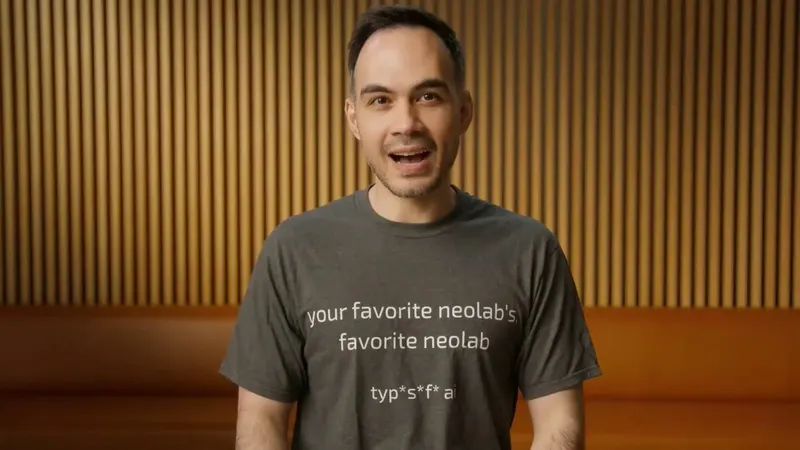
Introducing Phoenix-4.5, the fastest and most expressive real-time human rendering model on the market. More natural than ever before: richer facial animation, more expressive emotion and micro-movements, and movement that now extends through the upper body. It is the closest
Transcript
Today, we're introducing Phoenix 4.5, our most expressive real-time human rendering model yet. Our first zero-shot Phoenix model. A broader range of people rendered with substantially more natural behavior across more of the person in real-time. Humans are wired to communicate face-to-face. We build trust and connection not only through what someone says, but through whether their behavior matches the conversation. Expression has rhythm. Our lips follow speech, our face follows meaning, our head moves with cadence, our posture shifts as we speak and listen. Together, those signals create presence. Phoenix 4.5 brings substantially more of it into every interaction. The difference is immediately visible. Lip sync is tighter, head movement is more natural, micro-expressions are richer with more variation from moment to moment. Expression moves with the flow of speech, changing with cadence, emphasis, and intonation rather than feeling like animation layered on top of the words. That same naturalness carries into listening. A pal can react, settle, and remain visibly present even when it isn't speaking. For the first time, expression extends through the upper body with subtle movement across the shoulders and torso tied directly to speech. We move with the words we say, and now pals can too. That gives the model greater freedom to move, preserves more of the detail around an identity, and removes the boundary artifacts that used to appear when the motion pushed beyond the face. The result is not simply a more animated pal. It's a more natural conversational partner, one that feels present, stays coherent with the rhythm of the conversation, and makes the interaction easier to trust and stay immersed. Phoenix 4.5 also expands the range of physical features the model can handle, bringing a much broader range of faces to life. Real human appearance is messy. Hair falls in front of the shoulders, glasses cross facial features, earrings move, accessories extend beyond the face. Those details made some identities much harder to train, and in some cases, meant people had to change how they looked just to create a high-quality face. Phoenix 4.5 is a major step forward in handling that complexity. So long hair, glasses, earrings, headbands, and other previously difficult characteristics now work much more reliably. This is something we heard a lot, and we're excited that a much broader range of people can become high-quality pals, without changing the characteristics that make them look like themselves. Phoenix 4.5 is also our first model capable of rendering a new identity zero-shot. Previously, you needed to train an identity-specific model before you could see the person. Now, a new identity renders immediately, as a preview, then automatically refines to final quality. And fine-tuning drops from four hours to two. You can see the person, test the experience, and iterate before training is complete. Human computing only works when the person in front of you feels present. A tutor has to notice confusion, pause, react, and stay engaging through a real lesson. A nurse has to visibly listen when someone explains something difficult. A companion has to stay present through silence, laughter, and hesitation. In those experiences, realism isn't image quality. It's whether the person in front of you holds together, minute after minute. Phoenix 4.5 raises that bar dramatically. For experiences built around trust, attention, and conversation, it changes what the experience can be. Getting there required rebuilding Phoenix. Phoenix 4 used a 3D Gaussian splatting renderer focused around the face. For Phoenix 4.5, we built a new GAN-based rendering network from scratch, with a novel way of encoding expression. Instead of animating a facial region and compositing it back onto the image, Phoenix 4.5 generates much more of the person together, in milliseconds, during a live conversation. That one shift powers everything you've seen. The movement, the detail, and the range of people Phoenix can support. Human computing starts from a simple idea. People shouldn't have to adapt the way they communicate to interact with machines. And it goes beyond the face. The machine needs to interact the way we do. Modeling expression, timing, movement, and physical rhythm, so it can become a true partner in the dance of conversation. That is the bar Phoenix 4.5 is built against. Phoenix 4.5 brings us closer to AI we can trust, connect with, and interact with, the way that we interact with each other. And ultimately, bringing human computing to life.
Machine-transcribed. Names and numbers may be off.
Similar launch videos



New winners in your inbox, weekly
Get the freshest revenue-making SaaS + the open-source repo to clone each one, before everyone else does.